About Me
I am a Postdoctoral Associate in Psychiatry at the University of North Carolina at Chapel Hill, working in the Carolina Center for Neurostimulation and the Frohlich Lab. I develop brain stimulation signals that mimic endogenous brain activity and test these biomimetic neuromodulation approaches in depression and antenatal depression. My work combines signal design, clinical trial execution, and electrophysiology to build more precise, physiology-grounded treatments for psychiatric illness.
My long-term goal is to build an independent translational research program that uses human electrophysiology to design and optimize stimulation signals that more precisely engage depression-relevant circuits.
Why biomimetic stimulation?
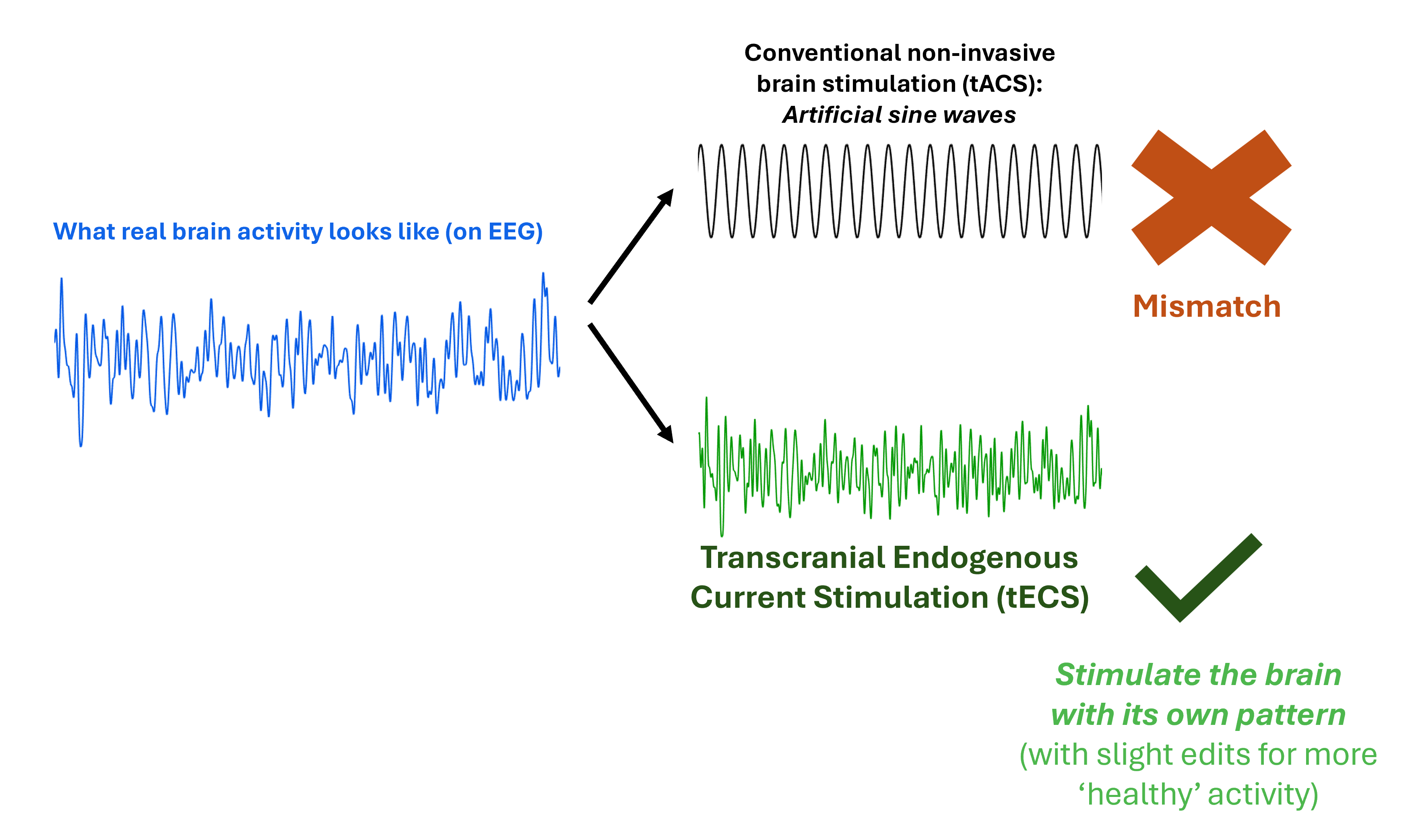
My work is driven by a simple question: why do we stimulate the brain with synthetic signals that do not look like actual brain activity? I am interested in whether treatment response can be improved when neuromodulation instead uses signals that better reflect endogenous neural dynamics.
What I am building
At UNC, I develop and help lead personalized neuromodulation approaches in psychiatry, including closed-loop tACS in major depressive disorder and naturalistic stimulation approaches in antenatal depression. A major focus of this work is understanding EEG-based biomarkers of brain network dysfunction and using electrophysiology to quantify target engagement.
tECS
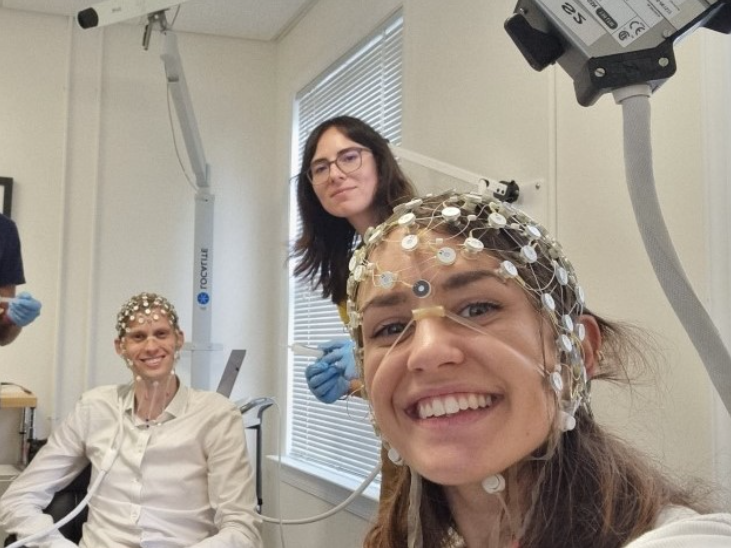
To address these questions, I developed transcranial endogenous current stimulation (tECS), a framework in which stimulation waveforms are derived from an individual’s own EEG, selectively edited to target specific physiological features, and re-delivered as neuromodulation. I served as first author on our 2026 Brain Stimulation paper defining tECS and demonstrating initial neurophysiological target engagement.
Background and trajectory
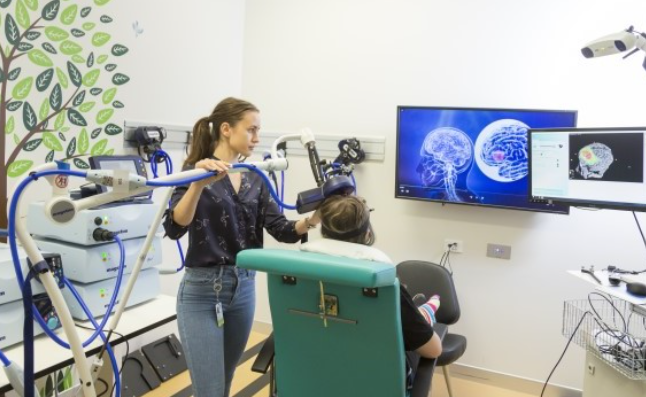
Before moving to UNC, I completed my PhD in Clinical Neuroscience at the University of Queensland Child Health Research Centre in Australia, where I investigated non-invasive brain stimulation to improve attention in children following acquired brain injury. That work combined structural and functional brain connectivity analyses with biomarker development and clinical trial delivery, including the first remotely supervised at-home brain stimulation trial in pediatric acquired brain injury.
Long-term vision
What distinguishes my program is its focus on the stimulation signal itself as the engineerable variable. Rather than only individualizing single features, such as how fast or strong we deliver stimulation, I am interested in using a person’s own brain activity through EEG to construct a physiologically grounded stimulation waveform, and using human electrophysiology to refine those signals for clinical translation.